Common Questions About Remote Teams for Providores & Wholesalers
Straight answers to the questions owners, operations managers, and admin teams ask when they are considering remote support for order processing, customer service, and back-office work.
We're sending your PDF to:
Most providores and wholesalers do not want theory. They want to know whether a remote team member can actually step in, follow process, work reliably, and reduce pressure without creating more problems. That is what this page is here to answer.
The real question is not “can this be done remotely?”
The real question is whether the work can be done consistently, accurately, and in a way that takes pressure off your local team.
For providores and wholesalers, the answer is often yes, especially for the repetitive, process-driven tasks that slow the business down when volume picks up.
Remote team members are well suited to the admin and support work that keeps the business moving but ties up local staff.
This can include:
order entry
inbox and email management
customer follow-up
supplier follow-up
credits and claims admin
data entry
reporting
spreadsheet updates
document preparation
CRM and system updates
general customer service support
The best starting point is usually the work that is repetitive, process-driven, and important, but does not need to sit with your senior local people.
Yes. That is a normal part of the setup.
Most businesses already have repeatable tasks, even if they are currently sitting in someone’s head instead of being properly documented. We help turn those tasks into a workable handover and training process.
The goal is not to force your business into a new system.
The goal is to build remote support around the way your business already operates.
That is common.
A lot of businesses in this industry still rely on older systems, desktop software, shared folders, spreadsheets, email, and manual processes. That does not automatically rule remote staffing out.
In many cases, secure remote access and clear process design are enough to make the role workable.
They can, depending on the role.
Some businesses want support during normal business hours. Others want earlier coverage, overflow support, or after-hours processing so work is already moving before the local team starts.
The role should be built around the operational need, not around a generic staffing model.
Correct. And that is exactly why the role needs to be structured properly.
Remote staffing works best when:
the task is clearly defined
the process is documented
there is a handover and checking process
performance is managed properly
If the work is messy, undocumented, and constantly changing with no ownership, the problem is not remote staffing. The problem is the process.
They can, if that suits the role.
Some clients use remote staff only for backend admin. Others have them handling customer emails, follow-up, and selected phone-based support.
The better question is not whether they can talk to customers.
The better question is which parts of customer communication should stay local, and which parts can be handled well through a trained remote team member.
Strong communication matters, especially in customer-facing or coordination roles.
That is why the hiring process needs to be aligned to the role. A person doing order processing and admin support may need a different profile from someone handling supplier coordination or customer enquiries.
You should not hire on hope.
You hire against the actual job.
No.
Some businesses start with one role because they already know where the pressure is. Others begin more carefully and shape the role around a smaller set of tasks before expanding it.
The important thing is to start where the operational pain is most obvious.
That depends on the role, the process, and how clear you are on what support you need.
If you know the tasks, systems, and outcomes required, the process moves faster.
If the role is vague, the business usually slows the process down itself.
The quickest path is clarity.
Then the issue gets dealt with.
One of the biggest mistakes businesses make is assuming they are stuck if a role is not the right fit. They are not.
A remote staffing model should include proper recruitment, oversight, and support, so performance issues are identified early and managed properly.
This is exactly why a structured provider model matters.
When businesses hire loosely and build everything around one person, they create single-point failure.
A better model includes documentation, support, oversight, and continuity so knowledge is not sitting with one individual only.
That reduces disruption if change happens.
Not necessarily.
You do not need to be a massive business to benefit from remote support. In fact, smaller businesses often feel the pressure more because owners and senior staff are still carrying admin work they should have handed off long ago.
If repetitive admin is slowing growth or dragging senior people back into low-value tasks, there is usually something worth looking at.
Data security and access control matter, especially when remote access is involved.
That means the setup should be deliberate:
controlled system access
role-based permissions
documented processes
secure devices and login practices
clear management oversight
Remote does not mean careless.
It means the operating model needs to be thought through properly.
Sometimes local hiring is the right move.
But many businesses in this sector run into the same problem: they struggle to find, train, and retain reliable admin support for repetitive operational work, especially when the role is not senior enough to attract strong local candidates but is still critical to the business.
That is where remote staffing often makes sense.
It gives the business a practical way to increase support without overloading the wage bill or keeping senior people buried in admin.
Usually by looking at where time is being lost now.
That often includes:
order entry bottlenecks
inbox overflow
slow customer follow-up
supplier admin
repetitive reporting
admin work being done by owners or senior team members
If high-value people are repeatedly being pulled into low-value tasks, that is usually the first clue.
Start with the work that is easiest to define and easiest to remove from your local team.
Do not start by trying to offshore everything.
Start by identifying the recurring tasks that create drag, pressure, or bottlenecks.
That is normally where the first win is.
Want to see where a remote team member could fit into your business?
If you are carrying too much admin internally, or your team is getting dragged back into repetitive operational work, we can help you identify where remote support would make the biggest difference.
Want to see where a remote team member could fit into your business?
Leave your number and I’ll call you back to discuss where the pressure is building in your business and what work could realistically be taken off your team.tly.
What Providores and Wholesalers clients are saying…
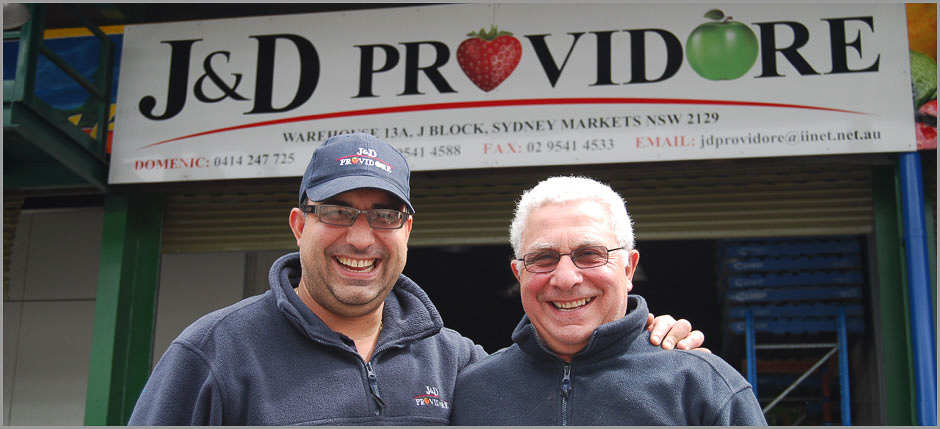
JD Providore (Wholesale business owners | Clients since December 2012)
Dom and Rocky
“We’ve been working with Adam and his team since December 2012.
Like most wholesalers, admin was always the part of the business that kept creeping into nights and weekends. Orders, invoices, emails — it never really stopped.
What changed wasn’t how we run the business, but how the admin work gets handled. Having reliable support around our admin has taken a huge amount of pressure off and allowed us to focus on the parts of the business that actually drive profit.
It’s been a long-term relationship built on consistency and trust, and that’s what’s made the difference for us.”
What other clients are saying…

Mark Stephens
Managing Director

Jeff Yang
Director & Head of B2B Social

James Kelly
CEO at Zupply

Callum Waite
Manager - People & Change